Ebook Free Ripples in Spacetime: Einstein, Gravitational Waves, and the Future of Astronomy, With a New Afterword
Connecting to the internet and starting to make handle getting this book can be done while having other task or working or being someplace. Why? This moment, it is extremely easy for you to connect net. When you intend to obtain the book while doing other activities, you could go to the link as in this site. It confirms that Ripples In Spacetime: Einstein, Gravitational Waves, And The Future Of Astronomy, With A New Afterword is very easy to get through seeing this web site.
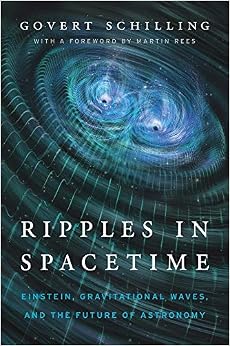
Ripples in Spacetime: Einstein, Gravitational Waves, and the Future of Astronomy, With a New Afterword

Ebook Free Ripples in Spacetime: Einstein, Gravitational Waves, and the Future of Astronomy, With a New Afterword
Read a book making your life running well, review a publication to make your experience improves without going somewhere, and read a publication for meeting your downtime! These sentences are so familiar for us. For the people that don't such as reading, those sentences will certainly be sort of really uninteresting words to utter. However, for the visitors, they will have bigger spirit when someone supports them with the sentences.
The Ripples In Spacetime: Einstein, Gravitational Waves, And The Future Of Astronomy, With A New Afterword is guide that we now recommend. This is not kind of large publication. However, this book will certainly assist you to get to the big idea. When you concern read this book, you could obtain the soft documents of it and save it in some various devices. Of course, it will rely on just what device that you possess and also do. For this case, the book is recommended to save in laptop computer, computer system, or in the gizmo.
Besides, this book is also written by one of the most popular author in the nation. So, when you appreciate the author so much, it will finish the collections of the compositions. But, when you are not very follower of the author, you could still fall in love with Ripples In Spacetime: Einstein, Gravitational Waves, And The Future Of Astronomy, With A New Afterword due to the fact that you will certainly understand how the author tells the web content to the readers as well as society. You can make deal with this book as one of referred details to make you really feel appreciated a lot with this book.
If you have actually chosen to obtain this book as the analysis resource, now you can spend you couple of time to see the web page and get guides. After reading, you will absolutely know why the factors we share it as one of the recommended exceptional books in this globe. Currently, let's do even more and also make true of Ripples In Spacetime: Einstein, Gravitational Waves, And The Future Of Astronomy, With A New Afterword to acquire.
Review
“In a sweeping new book, Ripples in Spacetime: Einstein, Gravitational Waves, and the Future of Astronomy, prolific science writer Govert Schilling has achieved the fascinating trifecta of historical and scientific accuracy, a grand sense of wonder and curiosity, and brilliantly accessible storytelling…Ripples in Spacetime goes far beyond the gravitational wave story you've heard over the past few years…It belongs on the shelf of anyone interested in learning the scientific, historical, and personal stories behind some of the most incredible scientific advances of the 21st century. As our scientific progress continues, this book will serve as a reminder of how far we’ve already come, how we got there, and what we’re looking forward to with our most hopeful ambitions.â€â€•Ethan Siegel, Forbes“A succinct, accessible, and remarkably timely survey of gravitational-wave astronomy as it developed over the past century…This book is a rare find…The book’s remarkable breadth and accessibility should make it the first piece of reading material for anyone―from high school students to policymakers―with an interest in gravitational waves…Ripples in Spacetime sets itself apart by putting the entire field into perspective―past, present, and future. It conveys a sense of awe about a century of scientific investment and achievement and a sense of excitement for what’s to come.â€â€•Richard O’Shaughnessy, Physics Today“Schilling gives us a lively and readable account of the [gravitational] waves’ discovery... Schilling underlines that this discovery is the opening of a new window on the universe, the beginning of a new branch of science. Astronomers will no longer be limited to observing space through the waves of electricity and magnetism (for example, visible light) entering telescopes, but will be able to observe it through waves of gravity. Galileo would have been amazed.â€â€•Graham Farmelo, The Guardian“A detailed account of the quest to detect gravitational waves.â€â€•James Ryerson, New York Times Book Review“Ripples in Spacetime provides a comprehensive and approachable guide to a complex subject.â€â€•Monica Young, Sky & Telescope“[Ripples in Spacetime] explains complex ideas clearly and entertainingly…It details the personalities, rivalries, collaborations, controversies, setbacks and successes of the century-long quest to test Einstein’s theories. Bang up to date, the book describes science in progress and as a process: how ideas are developed and discoveries made and rejected or confirmed. The best part for me was the detail the book goes into about the first detection and the meticulous protocols in place to scrutinize and eliminate every possible error. Schilling also looks ahead to what we can expect in this whole new field of astronomy. This is a book for everyone who was as excited as I was when the [Laser Interferometer Gravitational-Wave Observatory] discovery first broke, but also for anyone who wants to know what all the fuss was about.â€â€•Jenny Winder, BBC Sky at Night Magazine“In September 2015, a new frontier in astronomy beckoned with the first direct detection of gravitational waves, confirming Albert Einstein's prediction almost a century before. Govert Schilling's deliciously nerdy grand tour takes us through compelling backstory, current research, and future expectations.â€â€•Barbara Kiser, Nature“[Ripples in Spacetime] offers the reader a journey that goes beyond its title, exploring and connecting topics such as the cosmic-microwave background and its polarization, radioastronomy and pulsars, supernovae, primordial inflation, gamma-ray bursts and even dark energy… The book gives an interesting (and sometimes surprising) glimpse into the lives, aspirations and mutual interactions of the scientific pioneers in the field of gravitational waves.â€â€•Guillermo Ballestero, CERN Courier“A fascinating story of astronomy…Schilling walks readers through a lucid history of the universe, of general relativity, and of the bumpy search for Einstein’s last major unconfirmed prediction: the existence of gravitational waves…Schilling delivers a lively, expert, mostly comprehensible account, equal parts politics, personality, and science, of the search that ended two years ago…Schilling emphasizes that this is not simply another feather in Einstein’s cap, but a valuable new tool. The early universe was opaque to radiation until 380,000 years after the Big Bang, but gravity waves poured out from almost the beginning, so a new field of ‘gravitational wave astronomy’ can look back almost to the birth of the cosmos. An exciting history of the second great breakthrough of 21st-century physics.â€â€•Kirkus Reviews (starred review)“In this elegant and captivating book Govert Schilling takes us by the hand through a century of scientific adventures to one of the biggest discoveries of history.â€â€•Robbert Dijkgraaf, Director and Leon Levy Professor, Institute for Advanced Study
Read more
About the Author
Govert Schilling is an astronomy journalist and writer based in the Netherlands.Martin Rees is a cosmologist and space scientist based in Cambridge, England. He holds the honorary title of Astronomer Royal.
Read more
Product details
Paperback: 368 pages
Publisher: Belknap Press; 2 edition (March 18, 2019)
Language: English
ISBN-10: 0674237749
ISBN-13: 978-0674237742
Product Dimensions:
5.5 x 1 x 8.2 inches
Shipping Weight: 9.9 ounces (View shipping rates and policies)
Average Customer Review:
4.2 out of 5 stars
17 customer reviews
Amazon Best Sellers Rank:
#456,008 in Books (See Top 100 in Books)
In another book review I said that it’s easy to tell the difference between a book written by a scientist and a book written about science by a professional writer. This is the latter. Nothing wrong with that, of course — you trade the first-hand account of the scientist involved in a field for the third person narrative, by someone whose trade is writing and telling a good story.Really, it’s a choice for the reader. Do you want to focus on the science or on the story? Of course, the author tries to do both, but, in this case, it’s the story that takes precedence, with sometimes explicit time-outs to explain the science (e.g., a chapter on the Big Bang).The core of the book is the story of the first confirmed detection of gravitational waves, generated by colliding black holes, in September, 2015, by LIGO (Laser Interferometer Gravitational-Wave Observatory) in Hanford, Washington and Livingston, Louisiana.Schilling takes us through the history leading up to gravitational wave detection, from their prediction in general relativity through early attempts to detect their presence, and on to the surprisingly quick detection once LIGO came online. He takes some pains to explain both the history — gravitational waves were speculated upon prior to Einstein’s publications — and some of the physics behind them.Exactly what a gravitational wave is requires some explanation. Typically, waves are explained through analogy — a rock falls into a pond, causing waves to propagate through the pond’s water. But the analogy falls short. There is no medium like the water in the pond — the waves are ripples in space, or spacetime, itself. The ripples don’t propagate through space, the waves are waves in space itself — expansions and contractions in spacetime caused by gravitational events, like a collision between black holes. It doesn’t take a cataclysmic event like a collision of black holes to create gravitational waves, but it does take an event of that magnitude to trigger current detection technology.Schilling’s story captures the drama of the detection, but he also, rightly I think, tells the story of how the detectors were built. Gravitational waves were theoretical. No one had observed them. They were predicted, and their effects were observed. But to actually detect them was going to take a serious investment of time and money, not to mention the careers of the scientists involved. Getting funding for detecting something that may or may not exist, and may or may not be detectable with the planned instruments — that’s not an easy thing to go to funding sources with, in the United States or elsewhere.And what is the payoff?Confirming a principal prediction of general relativity is a huge payoff for scientists. Knowing that our account of the universe is confirmed at such a foundational level not only increases our confidence in that account. But it also sets constraints around where we have to go next, in the looming problem of reconciling quantum theory with general relativity. Some scientists expected, and may still expect, gravitational waves to expose problems in relativity theory that will lead us to that reconciliation. So far, general relativity is left standing in its predictions.Maybe more than anything else, though, gravitational wave detection presents us with what Schilling describes as a kind of additional sense modality. Gravitational waves are a wholly different phenomenon from electromagnetic radiation, sound waves, or any other medium through which we can observe what happens in the universe. When we opened our extended senses to radio, microwave, and other non-optical parts of the electromagnetic spectrum, we detected things that were completely unknown, like the cosmic microwave background legacy of the big bang. The ability to detect gravitational waves doesn’t just open another part of the same spectrum, but a completely different medium for observation. As Schilling says, it’s probably what will surprise us that will turn out to be most valuable.And in fact observing gravitational waves has some distinct advantages over observations of electromagnetic radiation. Gravitational waves are not absorbed or reflected by dust or gas — emissions from their points of origin travel unhindered to our detectors. And some currently poorly understood phenomena, like dark matter and dark energy, have especially interesting gravitational properties and effects, maybe best studied via gravitational wave astronomy, complementing more traditional astronomy. Schilling teases some of those possibilities in his final chapter.And gravitational wave detection may help us to understand some of the missing pieces in the story of the universe’s evolution from the Big Bang. "Primordial black holes†may be detectable via gravitational waves and give us some clues to those missing pieces.The universe is actually heavily populated with natural gravitational wave detectors — pulsars. Pulsars emit highly regular, fast pulses of radiation — their regularity, fast pace, and strength of signal make them natural clocks. If there is a change in the period of a pulsar’s signal, something has caused it, and the something might be the stretching or contracting of space via gravitational waves.Observations of changes in pulsar timing via radio telescopes are one active area for gravitational wave detection.Schilling’s later chapters look forward to other sorts of detectors, extensions of the design behind LIGO and the similar Virgo detector in Italy. These include space-based detectors like the European Space Agency’s long-planned LISA, and an underground detector, KAGRA, in Japan, as well as a LIGO-like detector in India. An even more ambitious ground-based detector called ET (Einstein Telescope) is also in planning stages, and an American project, Cosmic Explorer, with yet greater sensitivity to detect fainter and fainter gravitational waves is in idea-stage.If you’re looking to catch up on the story of gravitational waves, and maybe go on to more depth on the science itself, this is a great place to start. Schilling is a good writer, he knows enough about the science to explain it for a relatively non-technical audience, and he knows how to tell the story.
While I am glad I read this book, I found the author's many chatty comments gratuitous, irritating, and condescending. The material seemed a bit stretched to me, as if to consume more pages. Fuller discussion of a few things the author apparently deemed beyond our ken would have been a more profitable use of pages. Adding Martin Rees as a co-author when all he wrote was the forward mislead me, but that was probably my fault for not reading the fine print. I bought this on the recommendation of a trusted friend who listened to it as an audio book. Maybe the author's "voice" worked better in that medium. For the price of the hard cover I bought I expected a better treatment of the subject. But some of the author's analogies were quite good by way of explaining, and that seems to be his strength. I'd add an extra half star for that element if I could. I usually read these kinds of books with impatient gusto in a couple of days, but it took me well over a week to finish this one.
A book having a strong approach to many questions of general relativity. The style of author is clear and the lector follows it with attention and interest. So we have several informations about the great events of modern physics. A good list of notions very useful for applications of theory. Several arguments given for sure by theoretical view are posed in contraddiction with the experimental results.
The best review of the search for gravitational waves you will find. Humorous, accurate, and lots of background - open to general readers and scientifically-minded alike. If you want to see what all the buzz is about, this book will tell you.
Insightful, concisely presented and readable. A superb presentation of cutting-edge science (for those of us who still believe in the discipline)...
Great way to explain complex subjects to us, ignorant mortals.From stars life-cycle to gravitation and Einstein ideas on time and space , this book focus on the research about gravitational waves and why it makes sense (and a fascinating subject too).
Clearly written. Ties together loose ends from other authors on this extraordinary suibject.
Simply Astonishing! Every young student of Physics or Astronomy should leap at the chance to read this one! What a captivating inspiring story! I raced through the first 100 pages in a single sitting, then rationed myself to a single chapter per day to make the book last longer. I found that every time I picked it up to read some more, I was drawn in deeper and deeper. Each of the dozens of stories told in this book are woven together to support the main story, but with each side trip (to things such as Pulsars, the inner workings of Neutron stars, Weber bars, Carl Sagan's Apple Pie, BICEP2, Milisecond Pulsars, Frame Dragging, the anomalous precession of Mercury just to name a few) I'd reluctantly close the book, but my mind simply couldn't shut off after putting it down, and I'd be anxiously awaiting the next chance I'd have to spend another 30-minutes in this treasure trove of astonishing facts, and would find myself diving deeper into many of the topics Schilling brought up. Schilling writes with passion for the subject, and though I consider myself well-versed in Astronomy and Physics, there were so many fascinating nuggets in this story, that it was easy to be astonished anew! Highly recommended!! GREAT BOOK!!
Ripples in Spacetime: Einstein, Gravitational Waves, and the Future of Astronomy, With a New Afterword PDF
Ripples in Spacetime: Einstein, Gravitational Waves, and the Future of Astronomy, With a New Afterword EPub
Ripples in Spacetime: Einstein, Gravitational Waves, and the Future of Astronomy, With a New Afterword Doc
Ripples in Spacetime: Einstein, Gravitational Waves, and the Future of Astronomy, With a New Afterword iBooks
Ripples in Spacetime: Einstein, Gravitational Waves, and the Future of Astronomy, With a New Afterword rtf
Ripples in Spacetime: Einstein, Gravitational Waves, and the Future of Astronomy, With a New Afterword Mobipocket
Ripples in Spacetime: Einstein, Gravitational Waves, and the Future of Astronomy, With a New Afterword Kindle
Ripples in Spacetime: Einstein, Gravitational Waves, and the Future of Astronomy, With a New Afterword PDF
Ripples in Spacetime: Einstein, Gravitational Waves, and the Future of Astronomy, With a New Afterword PDF
Ripples in Spacetime: Einstein, Gravitational Waves, and the Future of Astronomy, With a New Afterword PDF
Ripples in Spacetime: Einstein, Gravitational Waves, and the Future of Astronomy, With a New Afterword PDF