Monday, March 29, 2010

Download PDF The Harvest of Sorrow: Soviet Collectivization and the Terror-Famine, by Robert Conquest

Download PDF The Harvest of Sorrow: Soviet Collectivization and the Terror-Famine, by Robert Conquest

Reviewing publication The Harvest Of Sorrow: Soviet Collectivization And The Terror-Famine, By Robert Conquest, nowadays, will not require you to constantly buy in the establishment off-line. There is a terrific location to buy guide The Harvest Of Sorrow: Soviet Collectivization And The Terror-Famine, By Robert Conquest by on the internet. This website is the very best website with great deals varieties of book collections. As this The Harvest Of Sorrow: Soviet Collectivization And The Terror-Famine, By Robert Conquest will certainly remain in this book, all books that you need will certainly correct below, too. Just hunt for the name or title of the book The Harvest Of Sorrow: Soviet Collectivization And The Terror-Famine, By Robert Conquest You could locate what exactly you are hunting for.
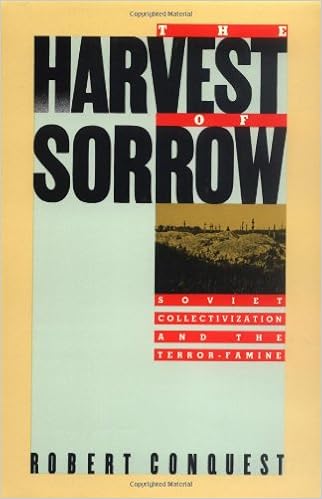
The Harvest of Sorrow: Soviet Collectivization and the Terror-Famine, by Robert Conquest

The Harvest of Sorrow: Soviet Collectivization and the Terror-Famine, by Robert Conquest


The Harvest of Sorrow: Soviet Collectivization and the Terror-Famine, by Robert Conquest


Download PDF The Harvest of Sorrow: Soviet Collectivization and the Terror-Famine, by Robert Conquest

What's your requirement to be reviewing material in this time? Is that guide that relates to the tasks? Is that guide that can captivate you in your lonesome time? Or, is that just sort of publication that you can check out to come with the downtime? Every person has various reason that they choose the particular publication. It will feature particular cover design, interesting title, advised subject, required motif, and also professional writers.

The presence of this brand-new publication can be a brand-new resource for you. This book is truly appropriate for accompanying your lonesome time in the leisure time. It will certainly be not so enjoyable when having no activities in your spare time. Viewing TV might be bringing. So that means, checking out The Harvest Of Sorrow: Soviet Collectivization And The Terror-Famine, By Robert Conquest could offer you new task and also bring you brand-new lesson. When you really feel so proper with this publication, why do not you take it now?

Checking out a publication can aid you to open the new world. From knowing nothing to recognizing every little thing can be reached when reviewing books sometimes. As lots of people state, more publications you read, extra things you would like to know, but few things you will certainly feel. Yeah, checking out the book will lead your mind to open up minded as well as always try to seek for the other knowledge, even from several sources. The Harvest Of Sorrow: Soviet Collectivization And The Terror-Famine, By Robert Conquest as a method of how guide is suggested will certainly be readily available for you to obtain it.

After establishing the interaction of you in order to like such publication, you could directly find as well as reach download and install and also make manage the The Harvest Of Sorrow: Soviet Collectivization And The Terror-Famine, By Robert Conquest The source can be received from link to offer below. As one of the best publication web site in the world, we constantly supply the best things. Of course, guide that we provide always guide that uses extraordinary thing to learn and obtain. If you think that you truly require this book now, get it as soon as possible.

The Harvest of Sorrow: Soviet Collectivization and the Terror-Famine, by Robert Conquest

Review

"A fine, thoroughly documented full-dress historical study of this genocidal campaign. Conquest grabs his reader at the start."--National Review"Vital to understanding 'Stalin's revolution.'"--Patrick J. Rollins, Old Dominion University"The Harvest of Sorrow is not just a heroic work of scholarship, but an embarrassment to Mikhail Gorbachev and an antidote to wishful thinking about the Soviet Union."*"Essential reading for those who wish to understand the nature of the Soviet system...likely to become a classic."--The Wall Street Journal"The Harvest of Sorrow is essential reading for those who wish to understand the nature of the Soviet system, and like Mr. Conquest's earlier account of Stalin's purges of the 1930s, The Great Terror, it is likely to become a classic."--The Wall Street Journal"The most comprehensive history of the Soviet agricultural crisis....Also the most vivid portrayal of one of the great crimes against humanity of the twentieth century."--American Historical Review"The first major scholarly book on the horrors [of Soviet collectivization]....Conquest has succeeded in restoring [the peasants'] human faces."--Time"A very good book of its kind."--T.E. Smuck, University of Hawaii"A superb book on a fascinating topic."--Bruce F. Adams, University of Louisville"A superb book on one of the most important questions in Soviet history."--Herbert Ellison, University of Washington"Excellent....It contains information on the Stalinist era, especially the consequences of collectivization, unavailable in any other book on Soviet society."--L.M. Kowal, University of Michigan"[A] superb work of history."--Newsweek"Meticulously researched...Robert Conquest presents a chilling account of Stalin's regime cold bloodedly killing twenty million of its own subjects."--The Washington Post Book World"Powerful and well-documented."--The New Republic"An excellent book....It is an eye-opener about a period of Soviet history that has been systematically falsified and ignored too often."--Steven M. Miner, Ohio University"A carefully researched and superbly written study. It deals with a period, and a set of problems, that rank among the most important (and most neglected) of Soviet historical studies."--Los Angeles Times Book Review"A comprehensive record of what may stand as the crime of the century."--The Chicago Tribune"Brilliant and brutal. Should be required reading for all of Gorbachev's apologists."--John C.K. Daly, Kansas State University"Absolutely essential to an understanding of the Soviet Union....Meticulously researched and well-written and the only comprehensive study of the appalling tragedy which befell in the Ukraine during collectivization."--Charles W. Chappius, Chicago State University

Read more

From the Back Cover

The first full history of one of the most horrendous human tragedies of the 20th century, The Harvest of Sorrow examines the atrocities inflicted on the Russian peasantry by the Soviet Communist party between 1929 and 1933.

Read more

See all Editorial Reviews

Product details

Paperback: 430 pages

Publisher: Oxford University Press; Reprint edition (November 12, 1987)

Language: English

ISBN-10: 0195051807

ISBN-13: 978-0195051803

Product Dimensions:

8 x 0.8 x 5.3 inches

Shipping Weight: 1.4 pounds (View shipping rates and policies)

Average Customer Review:

4.5 out of 5 stars

70 customer reviews

Amazon Best Sellers Rank:

#375,826 in Books (See Top 100 in Books)

The present day (2015) conflict between Russia and the Ukraine has deep seated roots that have a long history. This book documents the situation in the early 1930s when Stalin attempted to destroy Ukrainian nationalism, coupled with his general policies within the Soviet Union. In addition to deportations of families and executions, he followed agricultural policies that starved a large portion of the population. Millions died, particularly young children and older people. It was always dangerous having a mercurial leader like Stalin who distrusted everyone. People who carried out his policies one year, could themselves fall victim to purges and executions the next year. Reading history can tend to be dry (it is not written as a popular novel), but it is worth sticking to it to understand the background of the present conflict. Putin, like Stalin, seems intent on destroying Ukrainian nationalism for whatever reason.The book provides a good summary of the flawed economic policies of the Soviet Union in the 1930s. Destroying the incentive for people to excel and advance themselves does not work well. That Is coupled with basic problems in Communist theory that fail to put proper values on distribution, and fail to properly match production with market needs.

A must read for anyone wanting to fathom present-day politics in America or anyone interested in understanding the differences between republicanism, socialism, communism and our present-day very loose use of the word 'democracy.' If you want to understand why the WWII generation feared communism, this book will explain it. Don't pick it up for a light read. On the other hand, Conquest researched then documented every concept and description in the book, having attained some from the most difficult sources of the twentieth century, including pre-Paristroika issues of Pravda. Given the density of Conquest's narrative, read the chapter on the children - afterward, you'll want to read the whole book. When you're finished, no one will ever again pull-the-wool over your eyes. If, however, you're predisposed to Progressive policy, this book will offend you.

An amazingly comprehensive collection of detailed information about the terror famine and the collectivisation drive that led up to it, particularly in the Ukraine and the Cossack regions, where a disproportionate number were murdered compared to the rest of the Soviet Union. As in The Great Terror, Conquest is objective in compiling and sourcing data, but does not hold back from reasoned judgments. It's a pity this book has not been more widely read. During the Cold War, Conquest was often dismissed as a Cold Warrior or anti-communist, and perhaps just as often used by right-wing extremists (and even anti-semites, who will actually find no justification whatever for their views in this book) to bolster their own agendas. Now that the books have been thrown open in Russia and the Ukraine, this book appears almost as an understatement of the horrors of the first half of the 1930s.

Since WWII Jews around the world have routinely resolved to “never forget” Hitler’s brutal effort to destroy the Jewish people. So too all of us should determine to never forget the far costlier devastation visited upon Russia by Joseph Stalin. In concentration camps such as Belsen and Auschwitz the Nazis slaughtered some six million people, but a decade earlier, in the Ukraine and adjacent Cossack areas in southern Russia, the Bolsheviks killed nearly twice as many peasants—totaling more than all deaths in WWI. The late English historian Robert Conquest devoted much of his life to finding, rigorously documenting, and publishing the truth regarding what transpired in the Soviet Union between WWI and WWII. One of his most powerful treatises is Harvest of Sorrow: Soviet Collectivization and the Terror-Famine (New York: Oxford University Press, c. 1986). The book’s title is taken from “The Armament of Igor,” a poem lamenting that: “The black earth / Was sown with bones / And watered with blood / For a harvest of sorrow / On the land of Rus.’” For many centuries Russian peasants were serfs—working the land of aristocratic landowners who often exploited them. Reform movements in the 19th century, much like anti-slave movements in America, led to their liberation in the 1860s. While certainly harsh by modern standards, their lot slowly improved, though like sharecroppers following the Civil War in America they were generally landless and impoverished in a nation firmly controlled by the Tsar and aristocracy. Thus the Bolshevik revolution in 1917 was initially welcomed by peasants who often seized and carved up the large estates they worked on, hoping for the better life promised by the upheaval. Yet they “‘turned a completely deaf ear to ideas of Socialism’” (p. 44). As Boris Pasternak made clear, in a passage in Doctor Zhivago: “‘The peasant knows very well what he wants, better than you or I do . . . . When the revolution came and woke him up, he decided that this was the fulfillment of his dreams, his ancient dream of living anarchically on his own land by the work of his hands, in complete independence and without owing anything to anyone. Instead of that, he found the had only exchanged the old oppression of the Czarist state for the new, much harsher yoke of the revolutionary super-state’” (p. 52). Realizing that the innate love of farmers for land ownership and free markets militated against his totalizing ideology, Lenin noted that he would ultimately “‘have to engage in the most decisive, ruthless struggle against them’” (p. 45). He’d found that Communists such as himself knew little about economics—as was evident when he tried to abolish money and banking—and quickly launched the New Economic Policy, effectively restoring important aspects of capitalism. He also had to find effective ways to encourage agricultural productivity, so he delayed collectivizing agriculture in the 1920s. By the end of that decade, however, Joseph Stalin had seized sufficient power to undertake the radical restructuring of Russian agriculture. A 1928 grain crisis prompted Party bureaucrats to mandate production quotas, taxes and distribution mechanisms. They also needed scapegoats to blame and signaled out the best, hardest working and most prosperous farmers (the kulaks who owned a few acres and a handful of animals and even hired laborers as needed) who seemed to qualify as closet capitalists and “wreckers.” As Stalin declared: “‘We have gone over from a policy of limiting the exploiting tendencies of the kulak to a policy of liquidating the kulak as a class’” (p. 115). Stalin and the Soviet Politburo established the All Union People’s Commissariat of Agriculture, staffed by alleged “experts,” which was authorized to push the peasants into collectives and set utterly utopian, ludicrous goals for yearly harvests. Such policies (part of Stalin’s Five Year Plan) led to an “epoch of dekulakization, of collectivization, and of the terror-famine; of war against the Soviet peasantry, and later against the Ukrainian nation. It may be seen as none of the most significant, as well as one of the most dreadful, periods of modern times” (p. 116). Farmers who failed to meet their quotas or “hoarded” grain (even seed grain!) were arrested and resettled in remote regions if not shot or sent to camps. Conquest documented, in mind-numbing, heart-rending detail, this deliberate destruction of those who stood in the way of Stalin’s grand socialistic agenda. To the Party, in the words of a novelist, “‘Not one of them was guilty of anything; but they belonged to a class that was guilty of everything’” (p. 143). And in the “class struggle” intrinsic to Marxist analysis, evil classes must be destroyed. Sifting through all the documents available to him, Conquest estimates that at least fourteen million peasants perished. “Comparable to the deaths in the major wars of our time,” Stalin’s “harvest of sorrow” may rightly be called genocide. Above all, Stalin targeted the peasants of the Ukraine, the Don and Kuban, where a massive famine transpired in the early ‘30s. Party activists (generally dispatched from the cities and lacking any knowledge of agriculture) presided over the process. One of them recalled: “‘With the rest of my generation I firmly believed that the ends justified the means. Our great goal was the universal triumph of Communism, and for the sake of that goal everything was permissible—to lie, to steal, to destroy hundreds of thousands and even millions of people, all those who were hindering our work or could hinder it, everyone who stood in the way’” (p. 233). One of the few Western journalists daring to discern and tell the truth, Malcolm Muggeridge, said: “‘I saw something of the battle that is going on between the government and the peasants. The battlefield is as desolate as nay war and stretches wider; stretches over a large part of Russia. One the one side, millions of starving peasants, their bodies often swollen from lack of food; on the other, soldier members of the GPU carrying out the instruction of the dictatorship of the proletariat. They have gone over the country like a swarm of locusts and taken away everything edible; they had shot or exiled thousands of peasants, sometimes whole villages; they had reduced some of the most fertile land in the world to a melancholy desert’” (p. 260). Consequently, Soviet agriculture imploded. In 1954 the Nikita Khrushchev admitted that despite the more highly-mechanized farming techniques in the collectives “Soviet agriculture was producing less grain per capita and few cattle absolutely than had been achieved by the muzhik with his wooden plough under Tsarism forty years earlier” (p. 187). And what’s true for agriculture is true for the rest of the USSR under Communist rule—socialism inevitably destroys whatever it controls.

Conquest takes the reader into a dark, deep journey inside the Stalinist state. He illustrates the destruction of a society which produced in abundance and to excess prior to the socialist boot put on the throat of the hard working, patriotic peasant by the tyrannical leaders of the socailist paradise. Conquest is explicit. The reader feels compassion and great sorrow for the incalcuable suffering of the Soviet Union's most vulnerable men, women and chlldren. It is not possible to read this account of unchecked, central government brutality and not appreciate the horror of what happens to societies in which the ruling elite have no reason to fear the ruled.

The Harvest of Sorrow: Soviet Collectivization and the Terror-Famine, by Robert Conquest PDF
The Harvest of Sorrow: Soviet Collectivization and the Terror-Famine, by Robert Conquest EPub
The Harvest of Sorrow: Soviet Collectivization and the Terror-Famine, by Robert Conquest Doc
The Harvest of Sorrow: Soviet Collectivization and the Terror-Famine, by Robert Conquest iBooks
The Harvest of Sorrow: Soviet Collectivization and the Terror-Famine, by Robert Conquest rtf
The Harvest of Sorrow: Soviet Collectivization and the Terror-Famine, by Robert Conquest Mobipocket
The Harvest of Sorrow: Soviet Collectivization and the Terror-Famine, by Robert Conquest Kindle
The Harvest of Sorrow: Soviet Collectivization and the Terror-Famine, by Robert Conquest PDF

The Harvest of Sorrow: Soviet Collectivization and the Terror-Famine, by Robert Conquest PDF

The Harvest of Sorrow: Soviet Collectivization and the Terror-Famine, by Robert Conquest PDF

Tuesday, March 9, 2010

Download Ebook Race in Mark Twain's Adventures of Huckleberry Finn (Social Issues in Literature)

Download Ebook Race in Mark Twain's Adventures of Huckleberry Finn (Social Issues in Literature)

Even reading is an easy thing and it's really basic without investing much money, many individuals still feel lazy to get it. It ends up being the trouble that you constantly face daily. Hence, you should start discovering the best ways to invest the moment quite possibly. When it comes with the excellent publication, you might enjoy to read it. As instance is this Race In Mark Twain's Adventures Of Huckleberry Finn (Social Issues In Literature), it can be your starter book to discover reading.

Race in Mark Twain's Adventures of Huckleberry Finn (Social Issues in Literature)

Race in Mark Twain's Adventures of Huckleberry Finn (Social Issues in Literature)


Race in Mark Twain's Adventures of Huckleberry Finn (Social Issues in Literature)


Download Ebook Race in Mark Twain's Adventures of Huckleberry Finn (Social Issues in Literature)

Introducing a new hobby for other people may inspire them to join with you. Reading, as one of mutual hobby, is considered as the very easy hobby to do. But, many people are not interested in this hobby. Why? Boring is the reason of why. However, this feel actually can deal with the book and time of you reading. Yeah, one that we will refer to break the boredom in reading is choosing Race In Mark Twain's Adventures Of Huckleberry Finn (Social Issues In Literature) as the reading material.

This is among your much-loved books, isn't it? That's true. If this is one of them, you can begin by reviewing page by web page for this publication. The factors may not be so complex. We provide you an excellent publication that will certainly not just inspire you however also show you the true life. When getting this book to check out, it will certainly be so various when you check out others. This is a brand-new coming book that makes this world so shacked. For the sake of your life, you can get many alternatives and also advantages create this Race In Mark Twain's Adventures Of Huckleberry Finn (Social Issues In Literature)

By reading this publication, you will see from the other frame of mind. Yeah, open mind is one that is needed when checking out guide. You may additionally need to choose what information and lesson that is useful for you or unsafe. However actually, this Race In Mark Twain's Adventures Of Huckleberry Finn (Social Issues In Literature) deal you no harm. It offers not only the requirements of many people to live, however likewise additional features that will keep you to offer excellence.

Spending the extra time by reviewing Race In Mark Twain's Adventures Of Huckleberry Finn (Social Issues In Literature) can provide such fantastic experience also you are just seating on your chair in the office or in your bed. It will not curse your time. This Race In Mark Twain's Adventures Of Huckleberry Finn (Social Issues In Literature) will certainly assist you to have more priceless time while taking remainder. It is extremely delightful when at the twelve noon, with a mug of coffee or tea and also a book Race In Mark Twain's Adventures Of Huckleberry Finn (Social Issues In Literature) in your kitchen appliance or computer screen. By appreciating the sights around, here you could start reading.

Race in Mark Twain's Adventures of Huckleberry Finn (Social Issues in Literature)

From Booklist

The Social Issues in Literature series is a gold mine for the high-school—or even college—student looking for an entry point into an analysis of a classic text. Reprinted articles are broken into three groups: those that focus on the author; those that focus on how the headline issue is exercised within the book itself; and those that expand that issue into contemporary settings. As there is so much existing material on Twain, Race in Mark Twain’s Adventures of Huckleberry Finn is probably less essential, though still valuable in how it extends classic readings into the new millennium (one of the reprinted articles is by Barack Obama; another is called “Racism on the Campaign Trail”). Pictures are minimal, but movie stills are used when available. Readable and useful, these books will rescue paper writers everywhere. Grades 9-12. --Daniel Kraus

Read more

Product details

Series: Social Issues in Literature

Paperback: 224 pages

Publisher: Greenhaven Press (July 31, 2009)

Language: English

ISBN-10: 0737746173

ISBN-13: 978-0737746174

Product Dimensions:

6.2 x 0.5 x 9.2 inches

Shipping Weight: 8.5 ounces (View shipping rates and policies)

Average Customer Review:

Be the first to review this item

Amazon Best Sellers Rank:

#4,650,857 in Books (See Top 100 in Books)

Race in Mark Twain's Adventures of Huckleberry Finn (Social Issues in Literature) PDF
Race in Mark Twain's Adventures of Huckleberry Finn (Social Issues in Literature) EPub
Race in Mark Twain's Adventures of Huckleberry Finn (Social Issues in Literature) Doc
Race in Mark Twain's Adventures of Huckleberry Finn (Social Issues in Literature) iBooks
Race in Mark Twain's Adventures of Huckleberry Finn (Social Issues in Literature) rtf
Race in Mark Twain's Adventures of Huckleberry Finn (Social Issues in Literature) Mobipocket
Race in Mark Twain's Adventures of Huckleberry Finn (Social Issues in Literature) Kindle

Race in Mark Twain's Adventures of Huckleberry Finn (Social Issues in Literature) PDF

Race in Mark Twain's Adventures of Huckleberry Finn (Social Issues in Literature) PDF

Race in Mark Twain's Adventures of Huckleberry Finn (Social Issues in Literature) PDF

Saturday, March 6, 2010

PDF Ebook Eating Well for Optimum Health: The Essential Guide to Food, Diet, and Nutrition

PDF Ebook Eating Well for Optimum Health: The Essential Guide to Food, Diet, and Nutrition

Come with us to read a new book that is coming just recently. Yeah, this is a brand-new coming book that many people actually wish to check out will you be just one of them? Of course, you should be. It will certainly not make you really feel so tough to enjoy your life. Also some people think that analysis is a difficult to do, you have to make sure that you can do it. Hard will be really felt when you have no concepts regarding just what type of publication to check out. Or often, your analysis product is not intriguing enough.

Eating Well for Optimum Health: The Essential Guide to Food, Diet, and Nutrition

Eating Well for Optimum Health: The Essential Guide to Food, Diet, and Nutrition


Eating Well for Optimum Health: The Essential Guide to Food, Diet, and Nutrition


PDF Ebook Eating Well for Optimum Health: The Essential Guide to Food, Diet, and Nutrition

Among the recommended and popular publications to have today is the Eating Well For Optimum Health: The Essential Guide To Food, Diet, And Nutrition When you type the title of this publication, everywhere, you will certainly get it as one of the leading listed publication to review. Also it remains in the book store, authors, or in some websites. But, when you are rally keen on guide, this is your best time to obtain as well as download and install now as well as here with your internet connection.

The means of just how this book is presented in this website associates a lot with who we are. This is a website, a much referred site that provides great deals of books, from earliest to most current published, from straightforward to complex books, from a country to various other countries worldwide. So, it's not that array if Eating Well For Optimum Health: The Essential Guide To Food, Diet, And Nutrition is offered here. You know, you are one of the fortunate individuals that locate this web site.

When you have various means to conquer the visibility of this book, it will up to you. But, you should pick which one that will offer the short time to offer this book. This site becomes one to suggest since we always offer the resources and also checklists of guides from numerous countries whole the world.

It is possible for you who are looking for the very old book collection right here. Yeah, we give guides from all collections worldwide. So, can you imagine? A number of resources from worldwide can be found here. You may not should open resource to resource because we offer you the appropriate connect to get it. So, why do not you intend to obtain Eating Well For Optimum Health: The Essential Guide To Food, Diet, And Nutrition now? Allow make a plan where you will take this very remarkable publication. After that, just search for the other book collection that you need currently.

Eating Well for Optimum Health: The Essential Guide to Food, Diet, and Nutrition

Amazon.com Review

Hopefully, years from now, Eating Well for Optimum Health will be looked upon as the book that saved the health of millions of Americans and transformed the way we eat--not as the book we overlooked at our own peril. It clarifies the mishmash of conflicting news, research, hype, and hearsay regarding diet, nutrition, and supplementation, and further establishes the judicious Dr. Weil, the director of the Program in Integrative Medicine at the University of Arizona, as a savior of public well-being. If you've ever wondered what "partially hydrogenated soybean oil" really is, been perplexed by contrary news reports about recommended dosages for supplements, or questioned the safety of using aluminum pots for cooking, Dr. Weil will make it all clear. Weil (pronounced "while") bravely criticizes many of the major diet books on the market, and backs up his admonitions with science. He warns readers to not fall under "the spell" of the anticarbohydrate Atkins Diet, but also criticizes the eating plan advocated by Dr. Dean Ornish--which has been granted Medicare coverage for cardiac patients--as being too low fat for the majority of people. (The omega-3 fatty acids missing from Ornish's diet are essential for hormone production and the control of inflammation, he says.) It's also fascinating to learn that autism, Parkinson's disease, and Alzheimer's disease may be caused by omega-3 fatty acid deficiencies, while an excess of omega-6 fatty acids--very common in the typical American diet--can exacerbate arthritis symptoms. Weil's explanation of the chemistry of fats will prove difficult for most readers, but few will want to eat fast-food French fries ever again after reading his appalling reasons for avoiding them, which go way beyond their well-documented heart-clogging capabilities. After a thorough rundown of nutritional basics and a primer of micronutrients such as vitamins, minerals, fiber, and phytochemicals, Weil unveils what he feels is "the best diet in the world," with 85 recipes, such as Salmon Cakes and Oven-Fried Potatoes, that are healthy, tasty, quick to prepare, and complete with nutritional breakdowns. He includes a stirring chapter on safe weight loss (he sympathizes with the overweight and comically recalls his one-week trial of a safflower oil-diet while an undergraduate). Other, equally enlightening sections include tips for eating out and shopping for food (with warnings on various additives and a guide to organics), and a wondrous appendix with dietary recommendations for dozens of health concerns, including allergies, asthma, cancer prevention, mood disorders, and pregnancy. Eating Well is an indispensable consumer reference and one not afraid to lambaste the diet industry and empower the public with information about which the majority of doctors--to the detriment of the public health--are ignorant. --Erica Jorgensen

Read more

From Publishers Weekly

Now considered one of holistic medicine's most authoritative voices, Weil (Spontaneous Healing; 8 Weeks to Optimum Health) provides a common-sense approach to healthy eating. While much of this information can be found in other volumes, Weil illuminates the often confusing and conflicting ideas circulating about good nutrition, addressing specific health issues and offering nutritional guidance to help heal and prevent major illnesses. Of particular value is his examination of recent fads, such as low-carbohydrate, vegan and "Asian" diets, with an eye toward debunking the myths about them while highlighting their valuable aspects. Readers will appreciate the brief stories of individuals who have made big changes in their eating habits and solved chronic health problems, as well as recipes for foods that Weil feels will satisfy nutritional needs and the taste buds. Although not the first to link the rise of cancer, heart disease and obesity with the now-prevalent consumption of fast food and processed foods that contain a lot of sugar and few, if any, micronutrients, Weil's articulate plea to reflect on the consequences is convincing. Despite Weil's emphasis on a diet of fresh fruits and vegetables, unprocessed foods and much less meat and dairy products than most Americans are used to, readers will notice a profoundly realistic observation of what changes they can readily incorporate into their busy lives. And they will be heartened to learn that they can eat nutritious foods and still get much pleasure from them. (Mar.) Copyright 2000 Reed Business Information, Inc.

Read more

See all Editorial Reviews

Product details

Hardcover: 307 pages

Publisher: Knopf; 1 edition (March 7, 2000)

Language: English

ISBN-10: 0375407545

ISBN-13: 978-0375407543

Product Dimensions:

6.5 x 1.4 x 9.5 inches

Shipping Weight: 1.5 pounds (View shipping rates and policies)

Average Customer Review:

4.4 out of 5 stars

142 customer reviews

Amazon Best Sellers Rank:

#622,650 in Books (See Top 100 in Books)

America's best known medical advocate of alternative medicine espouses his ideas of what healthy eating should be for all people in this popular book. Unfortunately, despite his somewhat iconoclastic stance in medicine, he offers a very politically-correct diet for people to follow and his book is filled with misinformation and bad advice.In the beginning of the book, Weil discusses the debate between low-fat and high-fat diet advocates. He gives a little rundown of the squabbles between Dr Dean Ornish (the low-fat camp) and Dr. Robert Atkins (the high-fat camp). He says that, "Both sides have their sets of studies to draw from." Weil tries to distance himself from the low-fat camp but, basically, his book is all about low-fat eating. Oddly enough, even though he admits that the high-fat folk have studies to back up their claims, he never delves into them.Weil's advice on fats is to avoid saturated fats at all costs. He bashes butter on page 113, saying that, "Butterfat in the Western diet . . . is probably the greatest single contributor to the overload of saturated fat responsible for the high rates of cardiovascular disease in our societies." He offers no supporting references for these claims. If he bothered to do a little research, he'd see that butter consumption declined considerably in America during the time when heart disease rates began escalating. What Americans were eating more of during that time was margarine and processed vegetable oils--not more animal fat. (1)He then commits a most egregious error. He rightly warns people away from trans-fatty acids but then states that, " Butterfat is also one of the natural sources of trans-fatty acids." Weil is confusing artificially generated trans-fatty acids with the naturally occuring ones in butter and cream which our bodies handle with no problem.Nowhere in his butter bashing is there a discussion of the fat-soluble vitamins, beneficial fatty acids, or trace minerals present in butter.In his section titled "The Worst Diet In the World," the top of the list is given to, "A glut of saturated fat in the form of cheese, butter, cream, and other whole milk products, along with a lot of beef and unskinned chicken. That will ensure that most people will develop unhealthy levels of serum cholesterol and increased risks of cardiovascular disease" (p.148). Dr. Weil obviously needs to be educated about what causes heart disease . . . and what does not. Studies have not shown that saturated fatty acids cause heart disease (2) and people will be missing out on good, healthy food by following his advice. In Weil's view, the only allowable fats are olive and fish oils, and some nuts.In his section on protein, he makes the common, but incorrect, claim that excess dietary protein causes kidney damage and osteoporosis. He also claims that, "Traditional Inuit, who eat large amounts of animal protein along with their fat, have severe osteoporosis" (p. 106). No references are given for this lie.On page 109 he instructs readers not to eat organ meats, not because of their cholesterol content, but because of "possible concentrations of heavy metals, environmental toxins, and infectious agents [like Mad Cow Disease]." It never occurs to him to seek out organic sources of organ meats, true superfoods that are loaded with nutrients like vitamin A, carnitine, CoQ10, and the B complex vitamins.The book takes on an unintentional comic turn when he relates the story of a Japanese MD who switched to a mostly vegetarian diet. She claimed that a massage therapist could tell she didn't eat meat because her flesh "felt" different from a meat-eaters! Assuming the story is true, what, pray tell, is the definition of "meat-eater's flesh" and how does one "sense" it?!In his section titled "The Best Diet In the World," he presents a very skewed version of the Paleolithic diet (a la Loren Cordain and Boyd Eaton) and an equally wrong version of the traditional Japanese diet which he claims has "less than 10% fat, very little meat, and no milk or milk products." Has he ever been to Japan? Has he ever really studied what Japanese people eat? Obviously not (3).Of course, Weil pushes soy foods of all types in his book. He does admit that some research shows that soy's phytoestrogens might be causative or contributing factors in some forms of breast cancer, but he quickly brushes it aside and makes the usual grandiose, but unproven, claims for soy.Dr. Weil ends up hawking what he thinks is the Mediterranean Diet, based on the questionable research done decades ago by Ancel Keys. Instead of checking cookbooks from that part of the world (which show what real people eat as opposed to what ivory-tower intellectuals think they eat), he relies on second-hand information which is very wrong.He finishes off the book with 85 recipes. Despite his liking for olive oil, many of the recipes call for canola oil instead.This book is so full of misinformation that it cannot be recommended to anyone. Avoid it if you want to get and maintain "optimal health."1. S. Rizek et al. Fat in today's food supply. J Am Oil Chem Soc, 51:244, 1974.2. G Taubes. The soft science of dietary fat. Science, March 31, 2001, 291:5513 2536-45; U Ravnskov. The Cholesterol Myths (New Trends Publishing; USA), 2001.3. S Fallon and MG Enig. Inside Japan. Wise Traditions, 2:3, 2001, 34-42.

I started reading through this book this weekend but became suspicious when he started talking about sugar. He says that the reason we love to eat sugar is because of natural selection. Our "ancient ancestors" were the ones smart enough to grab some honeycombs and fruit on their way off to battle. Because they were so energized by this wonderful substance, they were able to fend of their enemies, thus enabling them to live and pass on this sweet loving gene to us. If this was such a wonderful thing why is our country so rampant with disease, especially obesity and diabetes! He also hates milk and organ meat among many other foods that people in less cultured societies thrived on for a very long time. Some great books to read would be based on Dr. Weston Price who did studies in the 30's in many "Uncivilized" cultures around the world and found many people who did not have a dentist or doctor in their villages, but who were very healthy, long-lived people who had beautiful teeth, skin, bone structure and very little disease. These people even thrived on raw meats, organ meats, and unpasturized milk and butter. One would think that someone who has M.D. after his name would have a little more scientific study in his book other than "Natural Selection". Waste neither your money nor your health on this or any of his other books!

This book was published in 2000 but most of the advice is still very relevant 12 years later. Dr. Weil takes a sensible approach to diet and exercise and explains how to navigate your local grocery store and how to eat when you go to restaurants. He provides recipes and ideas for meals that will give you pleasure and health.In a world where many doctors are still uneducated about nutrition it is always refreshing to read one of Dr. Weil's books. This book shows that he has extensively researched healthy eating. He starts by explaining macronutrients and micronutrients. He does get a bit scientific at some points but if you enjoyed biology class you will fully understand all the concepts.I also appreciated his section on the glycemic index as I'm finally starting to take that seriously. I now find myself telling people to eat sweet potatoes instead of baked potatoes. I was shocked to learn that parsnips are worse than pretty much any vegetable you can think of. This book also explains that honey is not much better than sugar and that whole wheat bread is not really any better than white bread. You will seriously think about not eating very much bread after reading this book. But Dr. Weil is not against all carbohydrates as you will also see from some of his recipes.This book has a great section on various diets people promote. Dr. Weil gives the good and bad qualities of each diet and then explains which diet is best. He seems more in favor of the Mediterranean diet for the most part. I also liked his chapter on the worst possible diet you could ever eat. It really educated me on what I should avoid.There were many parts of the book that explained things I'd wondered about. Like in one section the raw foods diet is explained. I didn't realize that alfalfa sprouts had toxins in them. Dr. Weil explains how cooking destroys the toxins, making vegetables safe to eat. He also explains why grass-fed beef is a much better choice. The only thing I really questioned was his advice about coconut oil. Since now we know it is very healthy and good for the brain. So if you've been reading up on the current nutritional advice of the moment then you'll know you should be adding coconut oil and coconut milk to your diet. Tonight I made a lovely curry with coconut milk that was delicious.I must say that reading a Dr. Weil book is always intellectually satisfying and very comforting. You get the sense that Dr. Weil really cares about his readers and wants them to enjoy themselves as well. You can't go wrong with this excellent book on nutrition. It explains the basics and even teaches you how to read labels so you make the best choices at the grocery store.~The Rebecca Review

Eating Well for Optimum Health: The Essential Guide to Food, Diet, and Nutrition PDF
Eating Well for Optimum Health: The Essential Guide to Food, Diet, and Nutrition EPub
Eating Well for Optimum Health: The Essential Guide to Food, Diet, and Nutrition Doc
Eating Well for Optimum Health: The Essential Guide to Food, Diet, and Nutrition iBooks
Eating Well for Optimum Health: The Essential Guide to Food, Diet, and Nutrition rtf
Eating Well for Optimum Health: The Essential Guide to Food, Diet, and Nutrition Mobipocket
Eating Well for Optimum Health: The Essential Guide to Food, Diet, and Nutrition Kindle

Eating Well for Optimum Health: The Essential Guide to Food, Diet, and Nutrition PDF

Eating Well for Optimum Health: The Essential Guide to Food, Diet, and Nutrition PDF

Eating Well for Optimum Health: The Essential Guide to Food, Diet, and Nutrition PDF