


Free Ebook Academic Advising Approaches: Strategies That Teach Students to Make the Most of College
Currently, welcome the book vendor that will certainly come to be the most effective seller publication today. This is it publication. You may not really feel that you are not aware of this book, may you? Yeah, almost everyone knows about this publication. It will certainly also undergo just how guide is actually offered. When you could make the possibility of the book with the good one, you could choose it based upon the reason and also referral of how the book will be.
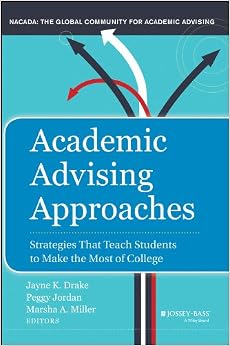
Academic Advising Approaches: Strategies That Teach Students to Make the Most of College

Free Ebook Academic Advising Approaches: Strategies That Teach Students to Make the Most of College
Locating one book to be the specific book to review from many publications in the world is sometime baffling. You might need to open as well as look lot of times. And currently, when locating this Academic Advising Approaches: Strategies That Teach Students To Make The Most Of College as just what you truly want, it's like locating sanctuary in the dessert. Actually, it is not regarding the author of this book or where this publication originates from. Often you will need this publication since you actually have the obligation to obtain or have the book.
Numerous responsibilities in this recent age require guide not only from the current book, yet additionally from the old book collections. Why not? We offer you all collections from the oldest to the newest publications in the world collections. So, it is extremely completed. When you really feel that guide that you have is really book that you want to check out now, it's so pleasured. However, we truly recommend you to check out Academic Advising Approaches: Strategies That Teach Students To Make The Most Of College for your very own requirement.
The soft documents indicates that you should go to the web link for downloading and install and then conserve Academic Advising Approaches: Strategies That Teach Students To Make The Most Of College You have owned guide to review, you have positioned this Academic Advising Approaches: Strategies That Teach Students To Make The Most Of College It is uncomplicated as going to guide establishments, is it? After getting this brief description, hopefully you could download and install one and also begin to check out Academic Advising Approaches: Strategies That Teach Students To Make The Most Of College This book is quite simple to read whenever you have the spare time.
Yeah, the material of this publication has simple words, simple language styles, and easy sensation to recognize. When you have located this advised book to read, one to do is just by inspecting it in the web link and also get it. You need to begin immediately since there are likewise many individuals who have obtained and read Academic Advising Approaches: Strategies That Teach Students To Make The Most Of College So, you will not be left back to know more concerning this publication web content.
From the Back Cover
To serve increasingly complex higher education institutions and their diverse student cohorts, academic advisors must understand multiple advising approaches and adroitly adapt them to their own student populations. Academic Advising Approaches outlines a wide variety of proven advising practices and strategies that help students master the necessary skills to achieve their academic and career goals. Linking theory with practice, contributors to Academic Advising Approaches provide an accessible updated reference useful to all who serve in an advising role. Based upon accepted theories within the social sciences and humanities, the approaches covered include those incorporating developmental, learning-centered, appreciative, proactive, strengths-based, Socratic, and hermeneutic advising as well as those featuring advising as teaching, motivational interviewing, self-authorship, and advising as coaching. All the contributors advocate relationship building as a means to encourage students to take charge of their own academic, personal, and professional progress. Praise for Academic Advising Approaches "As higher education increasingly focuses on student success, the impact exerted by academic advising on graduation is increasingly recognized and valued. This text firmly places academic advising in the teaching and learning paradigm as it features theoretical approaches and strategies for use as academic advising gains an integral role on campus." —Charlie Nutt, Executive Director, NACADA: The Global Community for Academic Advising "Good advising is a critical part of all students' college experiences. Specific suggestions make this book a wonderfully valuable addition to the advising literature and should appeal to advisors as well as advisees and their families." —Richard J. Light, Carl H. Pforzheimer Professor of Teaching and Learning, Harvard University "Finally a single resource incorporates a wide range of theoretical and practical perspectives to undergird and inspire targeted approaches by academic advisors. The ideas and practical applications should be incorporated into academic advisors' contacts with students and in the syllabus of every advisor training program." —Virginia N. Gordon, Associate Professor Emeritus, The Ohio State University
Read more
About the Author
Jayne K. Drake, Temple University, is past President of NACADA. Peggy Jordan, Oklahoma City Community College, is past Chair of NACADA's Publications Advisory Board and Two-Year Colleges Commission. Marsha A. Miller is NACADA's Assistant Director for Resources and Services.
Read more
Product details
Hardcover: 304 pages
Publisher: Jossey-Bass; 1 edition (September 16, 2013)
Language: English
ISBN-10: 9781118100929
ISBN-13: 978-1118100929
ASIN: 1118100921
Product Dimensions:
7 x 1.1 x 10 inches
Shipping Weight: 1.6 pounds (View shipping rates and policies)
Average Customer Review:
4.2 out of 5 stars
7 customer reviews
Amazon Best Sellers Rank:
#486,970 in Books (See Top 100 in Books)
Great book!
This text provides a comprehensive treatment of academic advising. Chapters delve into:• advising strategies to support learning• advising as teaching• learning-centered advising• developmental advising• motivational interviewing• appreciative advising• strengths-based advising• self-authorship• proactive advising• advising as coaching• Socratic advising• applying constructivism, systems theory, and hermeneutics to advising• and moreThis is a book that should be read by anyone who has responsibility for advising college students, whether they be a faculty advisor or advise full-time. This book is an informative and practical tool for college academic advisors.
This authoritative text presents an extensive academic and theoretical foundation for academic advising best practices. While some of the information, though based on research, seems very obvious, the references are thorough and easy to locate. Also featured are various "scenarios." I found these to be the most helpful aspect of the text. They are depicted in charts and guide the advising process using clear and specific language and practice. There is also a chapter on "Socratic Advising" that provides relevant and straightforward models. I have not seen this model presented as clearly in any other text. All in all, this is an excellent resource and reference book for any advising office or for any new adviser. Since both community college and university authors are represented, this is a comprehensive text.
This textbook contains a selection of essays on a variety of topics that academic advisors need to understand in order to effectively advise an increasingly diverse student population. Geared toward academic advisors in higher learning institutions, the book describes a variety of advising approaches, proven practices, and strategies for helping students to achieve academic success. An article I once read in Liberty Journal ("Changing the Model") points out that in the future, top universities will be considered prestigious not for how selective their admissions process is, but how well they educate the students they accept and help them realize their potential. Academic advising will be an essential part of student mentoring that will help universities achieve that level of prestige.
I am an actual professor. So, know that this review is from someone who tackles with issues of advising in a college setting. Now, here's where the text goes wildly wrong ... it is simply not practical. Whether one is teaching at a small liberal arts college or an overcrowded state university, the suggestions in this text (while well intended) are deeply impractical and painfully antiquated. Even at a small school, a professor's day is consumed with teaching, grading, standard office hours, service to the college (search committees, class observations, etc.), checking in on clubs, and scholarship. (Professors at state universities have even less time, often dealing with excruciating bureaucracy ... trust me, I've done it). The scenarios presented in this text are extraordinarily time-consuming. I would have students lined-up at my door if I adopted this approach. For instance, if a student is struggling in a class, the first and last stop is with that professor. That professor can suggest strategies for improvement, resources available to the student, or (in some cases) a remedial class (if a student is profoundly deficient). Typically, professors (especially at large universities) are not aware of all resources made available by all departments. Sure, students can seek solace in me about repeatedly failing calc II (I do feel for their situation), but the fact is the matter is that I'm not the person with whom they need to be speaking. Hence, some of these "I'm Okay, You're Okay" suggestions need to be ditched in the 1960s, to say the least. With a lobby of students waiting for the secretary to buzz them back to my office, it is not fair to them or to me to offer half-hour "feel good" sessions ... questions like "instead of focusing on this failure right now, where are things going right?" do not provide genuine help to anyone. "Disarming" and "discovering" as the text so succinct states (buzz words are fun, right?) equate to "frustrated students staring at my secretary" and "feeling accomplashed for two seconds, but still leaving with the same issue." It needs to be perfectly clear that professors do not have degrees in psychology and exist as ACADEMIC advisers merely to assist students in selecting the correct or best courses for their future career. It's really that simple. Likewise, we are not there to hold the hands of enraged students who are unable to meet the goals and expectations of the college. So, having a "pow-wow" about "Let's think about why this class may be required for your major" is not an option. I can just tell students, for example, "As a future high school teacher, you need this class in diversity since you will work with a wide group of students ... all of whom deserve your respect and compassion." So, the student does not needlessly have to brainstorm on the "why." I'll tell them why ... and then we will move on to the actual solutions.I have taught at a very small, semi-exclusive college for twelve years now. The methods presented in this text will not be effective here (nor would they be supported by senior faculty and administration). And, if they do not work here (where my advisees are few and talented), I can promise you that they will absolutely not work at large, overtaxed universities (where students must often advise themselves since actual advisement is a signature on a sheet or a pin-code taped to a door ... and, yes, I have friends and colleagues in this position as professors).
This is a well organized and structured resource for Professional and Faculty Academic Advisors. It has the most current advising models and definitions to inform best-advising practice and is a must-have for every advisor.
This book presents a nice overview of theories of advising, including academic, social and cultural dynamics. This book would make an excellent theory base for those in advising or student affairs, and would be great for masters or doctoral level students. However, for the practitioner it may seem lacking in practical step or procedures for advising students or building strong advising programs.
Academic Advising Approaches: Strategies That Teach Students to Make the Most of College PDF
Academic Advising Approaches: Strategies That Teach Students to Make the Most of College EPub
Academic Advising Approaches: Strategies That Teach Students to Make the Most of College Doc
Academic Advising Approaches: Strategies That Teach Students to Make the Most of College iBooks
Academic Advising Approaches: Strategies That Teach Students to Make the Most of College rtf
Academic Advising Approaches: Strategies That Teach Students to Make the Most of College Mobipocket
Academic Advising Approaches: Strategies That Teach Students to Make the Most of College Kindle
0 comments:
Post a Comment